
If you’ve ever searched this topic before, you’ve probably walked away more confused than when you started. One site makes fake ID websites sound incredibly advanced. Another claims they never work at all. Some people swear by them. Others say they got burned instantly.
The truth sits somewhere in the middle, and it’s far less dramatic than the internet makes it seem.
Fake ID websites don’t operate on magic, and they don’t operate on complete chaos either. They operate in a gray area built on visual imitation, inconsistent enforcement, and public misunderstanding of how ID verification actually works. Once you understand those three things, the entire system becomes easier to explain.
Need a Reliable Fake ID Fast?
Order Yours →What is a Fake ID Website?
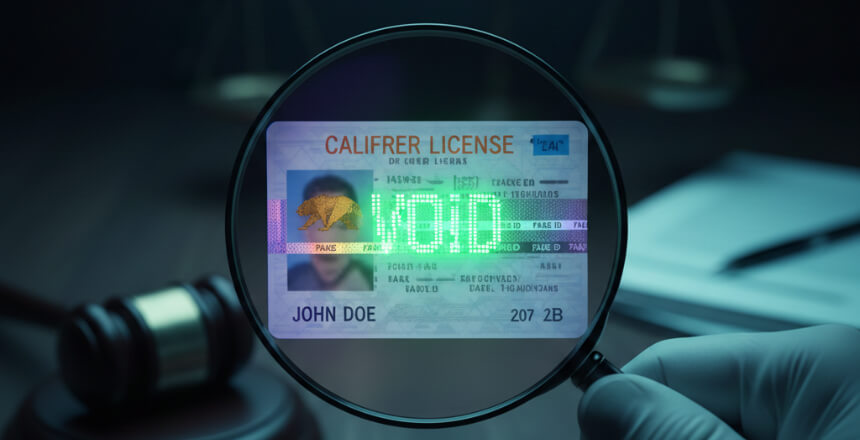
A fake ID website is an unofficial online vendor that claims to produce identification documents designed to look like state-issued IDs, such as driver’s licenses or state ID cards.
- They are not connected to any DMV.
- They do not have access to government databases.
- They do not “verify” anything in the official sense.
What they do is replicate appearance, not legitimacy.
This distinction matters more than anything else on this page.
Why Do Fake ID Websites Exist at All?
They exist because age verification in the U.S. is strict, decentralized, and heavily enforced at the business level.
Alcohol laws are enforced by states, not the federal government. Bars, liquor stores, and venues face fines, license suspensions, and shutdowns if they fail compliance checks. That pressure gets passed down to staff, scanners, and door policies.
For younger people, especially in college towns, this creates a demand. Not because laws are unclear, but because social environments often conflict with legal thresholds.
Fake ID websites exist to serve that demand, whether ethically, poorly, or fraudulently.
How Do Fake ID Websites Present Themselves to Look Legitimate?
They rely heavily on visual trust cues, not verifiable credibility.
Most of these websites use:
- Clean, modern layouts
- Confident language
- Claims of “state-specific” designs
- References to scanning or barcodes
- Limited contact options
What they avoid showing is just as telling:
- No real business registration
- No verified ownership
- No physical address
- No accountability trail
This is common in unregulated online markets. The design is meant to reduce hesitation, not to prove legitimacy.
What actually happens when a fake ID website asks for your information?
Once personal information is submitted, control is gone.
These sites typically collect:
- Names and dates
- Photos
- Formatting preferences
There is no standardized data handling, no enforceable privacy policy, and no external oversight. From a privacy perspective, this is one of the largest risks involved, regardless of whether anything is delivered.
Cybersecurity experts and consumer protection agencies like the FTC (Federal Trade Commission) consistently warn that unregulated vendors collecting personal data create long-term exposure, even when transactions appear small or informal.
Most people think about risk only in terms of “getting caught.” Very few think about data misuse years later.
How Do Fake ID Websites Claim Production Works?
They usually describe a process involving:
- Plastic card stock
- Printed graphics
- Visual security features
- Barcodes or magnetic stripes
What’s important to understand is what they cannot do.
They cannot:
- Access DMV databases
- Register an ID in any system
- Validate information against state records
Any data placed on an ID is static. It exists only on the card itself. This is why appearance and verification are two completely different things.
What Does “Scannable” Actually Mean When These Sites Use the Word?
When fake ID websites say an ID “scans,” they almost always mean barcode readability, not authentication.
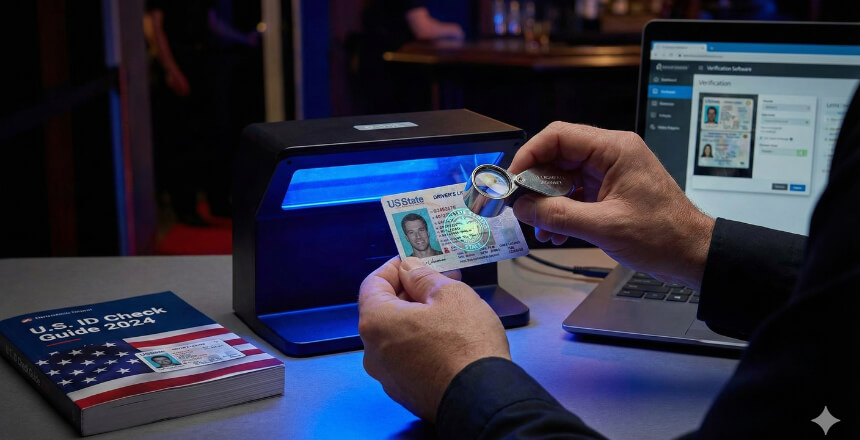
Many bars and venues use offline PDF417 barcode scanners. These scanners often:
- Read the barcode format
- Display encoded data
- Do not cross-check against any database
Other systems, especially those used by law enforcement or alcohol control agencies, do cross-check data or flag inconsistencies.
This distinction is backed by documentation from scanner manufacturers like IDScan.net and VeriScan, who openly explain that scanner capability depends on configuration, software version, and enforcement use case.
This is why one scanner accepts something while another flags it instantly.
Why Do Fake IDs Sometimes “work” And Sometimes Fail?
Because there is no single system.
Outcomes depend on:
The state you’re in
- Whether the venue uses scanners
- What type of scanner is used
- Staff training and judgment
- Time, crowd volume, and enforcement pressure
A bouncer doing a visual check on a busy night is not the same as a compliance officer using a calibrated scanner during a sting.
People mistake inconsistency for reliability. They’re not the same thing.
Why Does Quality Vary Even from the Same Website?
Because fake ID websites are always reacting, not leading.
State IDs change regularly. Fonts, layouts, holograms, and micro-features are updated as part of fraud prevention efforts coordinated by DMVs and influenced by federal standards like the Real ID Act.
Fake ID websites lag behind these updates. Even a small delay can create mismatches that scanners or trained staff notice immediately.
This is documented openly in DMV fraud prevention publications and law enforcement training materials.
Does Shipping Mean Anything Legally or Practically?
No. Shipping only means a package moved.
Mail delivery does not:
- Make an item legal
- Remove risk
- Prevent enforcement
- Eliminate traceability
The U.S. Postal Inspection Service and customs agencies regularly intercept illegal documents, especially during targeted operations.
The absence of interception does not equal safety. It only means nothing happened that time.
Why Do Fake ID Websites Disappear So Often?
Because there is no incentive for permanence.
These sites shut down due to:
- Payment processor bans
- Law enforcement pressure
- Chargeback accumulation
- Scam exits
Without regulation, stability is rare. This is why “trusted site” lists age poorly and why reviews contradict each other.
How Do Fake ID Websites Differ from Local Fake ID Makers?
Historically, fake IDs were produced locally. The internet changed that.
Online websites:
- Scale faster
- Offer anonymity to sellers
- Increase scam risk
- Reduce accountability
Local operations:
- Had higher visibility
- Lower scale
- Greater personal risk
Neither model is safe or legal. They simply shift who carries the risk and where.
How Does Law Enforcement Actually View Fake ID Websites?
Law enforcement focuses far more on use and distribution than curiosity.
Agencies prioritize:
- Use in alcohol fraud
- Repeat offenses
- Organized distribution
- Identity theft connections
Individual possession is often handled differently than organized activity, but this depends heavily on state law and context.
Why Do Online Stories About Fake ID Websites Contradict Each Other?
Because people confuse personal outcomes with system behavior.
One person’s success does not describe the system. It describes one moment, under one set of conditions, with one human decision involved.
Law, enforcement, and verification are probabilistic, not deterministic.
What Happens If You Get Caught?
Each topic answers a different question. None of them stand alone.
What’s the biggest misunderstanding people have about fake ID websites?
- They assume predictability.
- They assume if something looks real, it is real.
- They assume if something worked once, it will work again.
- They assume if someone else didn’t get caught, they won’t either.
That assumption is where most problems begin.
Final thoughts
Fake ID websites don’t operate on certainty. They operate on gaps in enforcement, gaps in understanding, and gaps between appearance and verification.
Most people don’t get into trouble because they’re reckless. They get into trouble because they misunderstand how fragmented and inconsistent the system actually is.
Understanding removes illusion. It doesn’t remove risk. But removing illusion is the first step toward informed decisions.
![What Is a Fake ID Website? [An Honest Explanation]](https://www.fakeids.com/blog/wp-content/uploads/2025/12/what-is-fake-id-website.webp)