
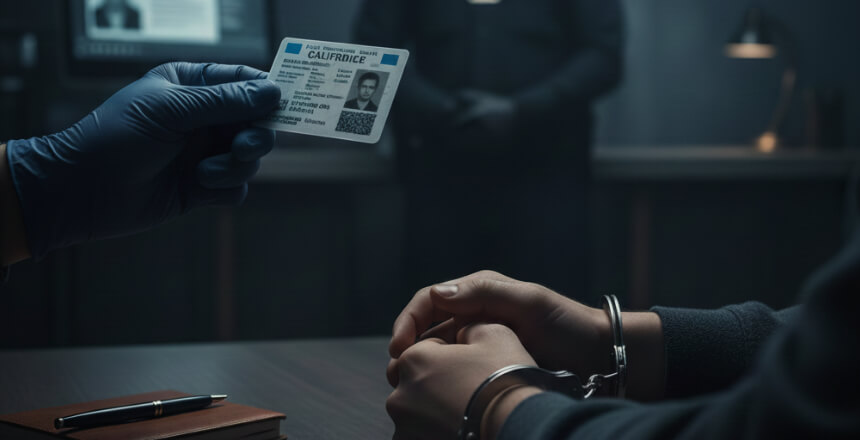
Most of the time, it starts small and awkward, not dramatic. Someone spots the ID, you get denied, and the card may get taken.
But sometimes it escalates into a police report, a citation, or a court date. The outcome depends on where you are, what you were trying to do (buy alcohol, enter a venue, etc.), and how your state treats possession vs use.
In this post, I'll walk you through what usually happens step by step, in plain words, so you know what's real and what's just internet noise. What happens in the exact moment you're caught? For more on this topic, see our guide on What to Say Caught Fake ID.
Usually, the person checking your ID refuses service and ends the interaction right there. In bars, clubs, and stores, the goal is simple: protect the business and its alcohol license. That's why many "caught" situations end with a quick "no" and nothing else. Learn more about this in our article on Why Cheap Fake IDs Get You Caught.
Here's what it looks like in real life. They pause, look again, maybe ask one short question, then stop the transaction.
A lot of staff are trained to check IDs in a systematic way (feel the card, look at features, ask a question). That's not them being dramatic. It's them doing what regulators expect.
Will they take (confiscate) your fake ID?
Often, yes. Confiscation is common, especially at bars and liquor stores, because it reduces risk instantly. Staff don't want the same ID used again five minutes later at the next register. Taking it is the fastest way to shut it down.
That said, the rules aren't identical everywhere. Some places have clear policies. Others leave it to the venue's judgment.
There are also states where guidance exists around what retailers should do with suspected false IDs and how they should handle them.
The part most people miss: confiscation is usually a business move first, not a legal punishment. Will they call the police every time?
No. Police are not automatically called in most "normal" fake ID catches. Many venues prefer to refuse service, take the ID (if policy allows), and move on. Calling police can create a scene, slow operations, and isn't required in every situation.
Police involvement becomes more likely when the venue is under pressure from enforcement.
One big example is a compliance check (sometimes called a sting), where law enforcement monitors underage purchase attempts and cites vendors who sell illegally.
So the real answer is: it depends on the night, the venue, and local enforcement intensity. What happens if it's a compliance check or sting?
If you're caught during a compliance check, escalation is much more likely. In those scenarios, the point is enforcement. The vendor is being tested, and law enforcement is watching what happens.
This is why some people say, "They just took it," while others say, "Cops were there in seconds." Both stories can be true. They happened under different conditions.
Compliance checks are specifically designed around underage alcohol purchase attempts and vendor accountability.
In practical terms, this is one of the biggest "hidden variables" that changes outcomes. What happens if police get involved?
If police step in, they usually switch the situation from "venue problem" to "legal classification." They'll look at the ID, ask a few basic questions, and decide whether this is a warning, a citation, or a charge.
Police aren't thinking in movie scenes. They're thinking in categories: possession, attempted use, or something bigger.
This is also where definitions matter. Federal law even defines what a "false identification document" is in terms of documents that appear to be government-issued.
That doesn't mean you'll face a federal case. It means "fake ID" is treated as a real legal concept, not just slang. Can you be arrested on the spot?
Sometimes, but it's not the most common outcome for a basic first-time fake ID situation. More often, people get a citation or a summons (a court date notice). Arrest becomes more likely if there are other issues layered on top.
Things that raise the temperature fast:
- you refuse to cooperate
- you cause a disturbance
- you have multiple IDs
- the ID is tied to other suspected fraud
The key point: the fake ID rarely "explodes" by itself. It escalates when the situation around it escalates. What charges do people usually face?
Most fake ID cases fall under misdemeanor-level charges, but the label varies by state. Common categories include forgery, false identification, and identity misrepresentation. The "name" of the charge changes, but the idea is similar: presenting or possessing a document meant to be trusted.
A simple way to understand why "forgery" shows up: forgery is often defined as creating or altering a legal instrument with intent to defraud.
Again, state law controls the exact charge. But this is why fake IDs aren't treated like harmless props in the legal system. What penalties are most common if it goes to court?
Common penalties include fines, community service, education programs, and sometimes probation. Jail is not the typical first outcome for a simple fake ID case, but court costs and long-term hassle are very real.
Judges often focus on "behavior correction" outcomes, especially for under-21 cases connected to alcohol.
What surprises people is how quickly costs add up:
- court fees
- required classes
- missed work or school for court dates
- transportation problems if driving privileges are affected
The punishment is often less about one huge penalty and more about a stack of small consequences that drag on. Can your real driver's license be suspended?
Yes, in many states, license consequences can happen even if the fake ID wasn't used for driving. This shocks people because they assume fake ID and driving are separate.
But driver's licenses are regulated through DMV systems, and states often use license actions as a strong deterrent.
Also, modern ID standards are tied to broader identity security frameworks, including REAL ID requirements for state-issued IDs.
So even when the incident happens at a bar, DMV-related consequences can still enter the picture depending on the jurisdiction.
Will this show up on your criminal record?
It can, but not always in the permanent way people fear. If you're convicted, it may appear on background checks. But many states offer diversion or deferred options for first-time offenders, where completing conditions can reduce long-term impact.
The important part is boring but real: paperwork and deadlines matter.
If you ignore a citation or miss a court date, the situation can become much worse than the original fake ID charge.
So the record question is less about panic and more about handling the process correctly. What if you're caught on campus or at a university event?
Campus cases can add school consequences on top of legal ones. If campus police are involved or it happens at a university-sponsored event, you may face student conduct action even if the legal case is minor. You can read more about this in Fake ID Laws & Legal Consequences.
This is why two people with the same fake ID can have totally different outcomes:
- one gets refused at a bar and goes home
- another triggers campus policy, parents get notified, or housing gets involved
It's not "luck." It's which system you bumped into: venue policy, state law, or campus discipline. What should you do right after you're caught?
Stay calm, don't argue, and don't treat it like a debate. The fastest way to turn a small moment into a bigger problem is escalating emotionally in front of staff or police.
Then do the practical things people forget:
- read any citation or paperwork carefully
- don't miss court-related deadlines
- if it's serious in your state, talk to a qualified attorney
Also, don't rely on "my friend said" stories. Fake ID outcomes vary heavily by state and context, and compliance checks change everything. FAQs - What Happens If You Get Caught With a Fake ID Will the bouncer or cashier confiscate my fake ID?
Often, yes. Many venues confiscate suspected fake IDs to stop immediate reuse and protect their liquor license. It's usually a business-protection move first, not "punishment." Policies vary by venue and state, so the exact outcome depends on local rules and how strict enforcement is that night. Will the police always be called if I'm caught?
No. Police are not automatically called in every fake ID situation. Many venues prefer to refuse service and move on. Police involvement becomes more likely during compliance checks (controlled purchase operations) or when the situation escalates (arguments, refusal to cooperate, multiple IDs). What happens if it's a compliance check or sting?
If you're caught during a compliance check, escalation is more likely because enforcement is the point of the operation. Compliance checks are widely used to test whether alcohol retailers follow laws that prohibit sales to underage buyers, and they can involve underage purchasers working with law enforcement. Can I be arrested on the spot for a fake ID?
It can happen, but many basic cases result in a warning, citation, or summons instead especially for first-time incidents. Arrest becomes more likely when there are added factors (refusal to cooperate, disorderly conduct, multiple fake IDs, or suspected broader fraud). Outcomes vary heavily by state law and context. Is possessing a fake ID illegal even if I didn't use it? We cover this in more detail in Is Using Fake ID Illegal. The National Conference of State Legislatures tracks expungement and record-sealing laws across all 50 states.
In some states, yes possession alone can be an offense. In others, penalties increase mainly when the ID is presented or used. The key point is that "I didn't use it" isn't a universal shield. Fake IDs are often treated under forgery/false ID/identity misrepresentation frameworks rather than a single "fake ID law." What charges are most common when someone gets caught?
Most fake ID cases are handled under misdemeanor-level charges like false identification, forgery-related offenses, or identity misrepresentation (names vary by state). At a high level, "forgery" generally involves creating or altering a legal instrument with intent to defraud. What does the law mean by "false identification document"? Federal identity document fraud is defined under 18 U.S.C. § 1028.
Federal law defines a "false identification document" as a document commonly accepted for identification that is not government-issued (or was altered) and appears to be issued by a government entity. What penalties can happen if it goes to court?
Common outcomes include fines, community service, alcohol education classes, probation, and court fees. Jail time is less common for basic first-time cases, but it depends on your state, your record, and whether the incident involved use vs possession. The process is often more painful than people expect because it's time-consuming and expensive. Can my real driver's license be suspended for a fake ID incident?
In some states, yes even if the incident happened at a bar and had nothing to do with driving. DMVs and courts sometimes use license consequences as a deterrent in underage or identity-related cases. The rules vary widely by state, so this is one of those "check your state-specific law" issues. Will getting caught with a fake ID show up on a background check?
It can. If the case leads to a conviction, it may appear on background checks depending on the jurisdiction and the type of check. Some places offer diversion or deferred outcomes for first-time offenders, which can reduce long-term impact if you complete the requirements. Deadlines matter missing court dates can make everything worse. What if I used someone else's real ID instead of a fake one?
Using someone else's ID is still a form of misrepresentation and can carry its own penalties (often treated differently than a fully counterfeit ID). The "it's real" part doesn't automatically make it safe. The key issue is that the ID is being used to claim an identity or age that isn't yours. What if the ID was real but altered?
An altered real ID (changed date of birth, photo, name, or data elements) is often treated very seriously because it moves into "altered for purposes of deceit" territory. Federal definitions explicitly include IDs that were issued by a government entity but later altered for deceit. What should I do right after I'm caught?
Stay calm, don't argue, and don't try to "talk your way out" once the decision is made. If you receive a citation or summons, read it carefully and meet every deadline. If the situation escalates to a legal case, talk to a qualified attorney in your state. (This is general info, not legal advice.)
Frequently Asked Questions
What happens if a bouncer catches you with a fake ID?
Most bouncers will confiscate the ID and deny entry. Some may call the police, particularly at venues with strict enforcement policies or if you become confrontational. In most cases, cooperating quietly results in confiscation only.
Will a fake ID show up on a background check?
A fake ID charge will appear on criminal background checks if it resulted in an arrest, citation, or conviction. This can affect college admissions, job applications, professional licensing, and security clearances.
Can you get a fake ID charge dismissed?
Dismissal is possible in some cases, especially for first-time offenders. Options include pre-trial diversion programs, deferred adjudication, or negotiating a plea to a lesser charge. An attorney familiar with local courts is essential for the best outcome.