
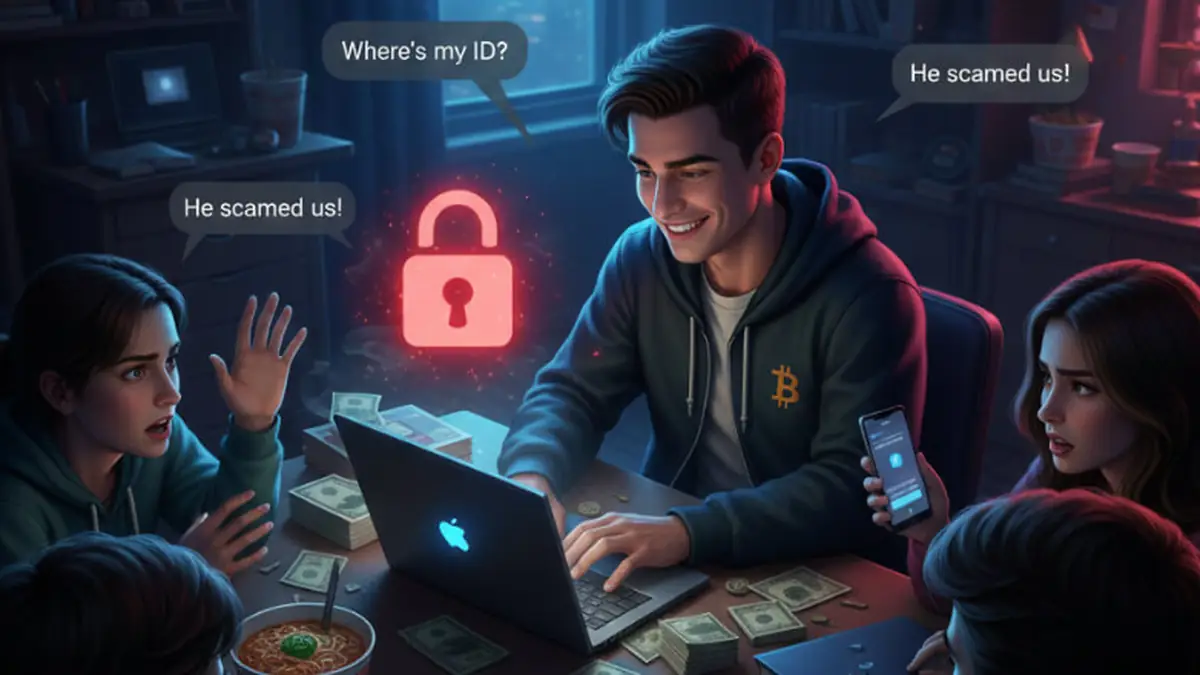
It sounds like the perfect deal.
A guy down the hall in your dorm knocks on your door. He says he has a "hookup" with a premium fake ID vendor. If everyone on the floor pitches in, he can get a massive group discount. He handles the Bitcoin. He handles the shipping. All you have to do is Venmo him $100 and send him your photo. Learn more about this in our article on Fake ID Group Order Discount Guide. Victims of reseller scams can file a report with the FBI Internet Crime Complaint Center.
Fifteen people sign up. The money is sent. You wait three weeks. We cover this in more detail in Fake ID Website Safety Guide.
Then, you get the dreaded group text: "Guys, bad news. Customs seized the package. The money is gone. Sorry."
Here is the brutal truth: The package wasn't seized. You just fell victim to the fastest-growing scam on college campuses today: The Campus Reseller Scam. When you order with friends, the stakes are higher. You can read more about this in How to Order Prop ID.
One bad move doesn't just lose you money; it destroys dorm reputations and leaves an entire group stranded.
Create a clean, high-quality novelty card for cosplay, parties, and content when you want the prop to look intentional. Novelty/prop only. Not for official identification or access. The Anatomy of the Reseller Exit Scam
Why is this scam so effective? Because it preys on trust and the fear of technology.
Most college freshmen are terrified of buying Bitcoin and terrified of having a fake ID mailed to their house. The Campus Reseller exploits this anxiety by offering to take on all the "risk" for you. For more on this topic, see our guide on How to Take Good Fake ID Photo.
Here is exactly how they run the scam from start to finish: Phase 1: The Cash Grab and Crypto Wall
The reseller collects Venmo payments or cash from 10 to 20 people. In a large dorm, this can easily total over $1,500.
Because standard buyers don't understand the blockchain, the reseller converts the cash to Bitcoin in their own private wallet. This creates a "Crypto Wall." From this moment on, you have absolutely no way to track where that money actually goes. Phase 2: The Cheap Bait and Switch
If the reseller is smart, they won't steal all of it. They might take $300 of the group's money and buy absolute garbage-tier, $20 Teslin IDs from a scam site in China. They pocket the remaining $1,200 as pure profit. Phase 3: The "Customs Seizure" Alibi
This is the brilliant part of the scam. When the IDs don't show up, or when the cheap Chinese fakes actually do get seized by CBP (Customs and Border Protection), the reseller has the perfect alibi.
They shrug their shoulders and blame the government. "I didn't steal it, the feds took it!" Because you were buying an illicit item, you can't exactly call the police to report the theft.
The scammer walks away with over a thousand dollars of your money, and you are left with nothing but an empty wallet.
The Security Risk of the "Middleman"
Even if the campus reseller has good intentions, using a middleman destroys your OPSEC (Operational Security).
When you buy a Secure ID, the goal is to keep your data between you and the encrypted server. Our guide on How We Keep Customer Data Private goes deeper into this.
When you use a dorm reseller, you are sending your highly sensitive PII (Personally Identifiable Information) your real name, your photo, your signature, and your height/weight to a random 19-year-old's unencrypted iPhone.
Where are those photos stored? Did he back them up to his iCloud? Did he email them to the vendor using a standard, unencrypted Gmail account?
Group discounts are real. Ordering with your friends is the smartest way to buy an ID. But you have to cut out the middleman.
You do not send your photo to your friend. You upload your data directly to our 256-bit SSL-encrypted servers. Your friend never sees your signature, and your data is purged the moment the order ships. 2. Verified Shipping & The Free Reship Guarantee If a reseller has collected your personal photos and information, IdentityTheft.gov provides steps to protect yourself.
Scammers use the fear of shipping to lie to you.
Our official resellers get a direct dashboard on our platform. You get legitimate discount codes to give to your dorm mates. You earn a safe commission in crypto directly from us, and your friends get the guarantee of buying directly from the industry's top manufacturer. Everyone wins, and nobody gets scammed. The FTC tracks advance-fee scam patterns that mirror how campus resellers operate.
The Bottom Line
Buying a fake ID with your friends should be an exciting milestone, not a financial trap.
Never hand your cash or your personal data to a "middleman" just because you don't want to learn how to buy Bitcoin. The Campus Reseller Scam thrives on laziness.
Frequently Asked Questions
What is a fake ID reseller scam?
A reseller scam is when someone collects money from a group to place a bulk order but either keeps the money, orders from a scam vendor, or pockets the difference between the actual price and what they charged the group.
How do I know if a fake ID reseller is scamming me?
Red flags include the reseller refusing to share the vendor name, collecting cash only, not providing order confirmations or tracking, giving vague delivery timelines, and being evasive when asked for specifics about the product.
Why are middleman group orders risky?
Middlemen add a layer of risk because you have no direct relationship with the vendor, no order confirmation, and no recourse if something goes wrong. The reseller controls all communication and can disappear with your money at any time.