
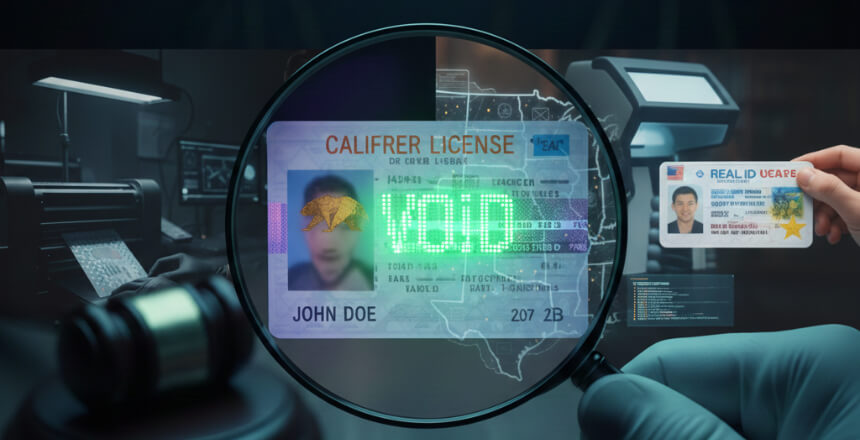
A fake ID isn't "just a card that isn't real." It's an ID that claims official authority it doesn't have.
That matters because IDs are part of how society decides who you are, how old you are, and whether you're allowed to do something. For more on this topic, see our guide on Why Transparency Matters Novelty ID Industry.
In this post, I'll break down what a fake ID actually means, what the law usually calls it, why driver's licenses are the most copied, how scanners fit in, and where people get confused (especially with "novelty" cards). What is a fake ID? You can read more about this in Novelty ID Education Center.
A fake ID is an identification document that pretends to be government-issued (like a driver's license or state ID) even though it wasn't actually issued by the state, or it was altered to misrepresent identity or age. In plain words, it's not "fake" because it's plastic. It's "fake" because it tries to borrow the credibility of a real ID system.
Here's the mental model that makes everything click.
A real ID isn't just a picture and a birthday. It's a promise that a government office verified the identity behind it.
A fake ID breaks that promise. That's why it gets treated as identity misrepresentation, not a harmless prop.
Why do people call it a "fake ID" if laws don't always use that phrase?
"Fake ID" is the street term. The law usually uses more formal labels like false identification document, forgery, or fraudulent identification. Those labels matter because they show how the system thinks about the problem. Learn more about this in our article on Who Uses Fake ID Websites.
In U.S. federal law, the concept shows up in statutes that talk about identification documents and "false identification documents."
You'll also see prosecutors and guidance documents frame it under "false identification" broadly, not only underage drinking.
So if you're searching the web and wondering why the words don't match, that's why.
The slang is simple.
The legal language is more specific. What's the difference between a fake ID, an altered ID, and a borrowed real ID?
A fake ID is typically counterfeit or fabricated to look official. An altered ID started real, then someone changed details like date of birth or photo. And, a borrowed real ID is a genuine ID that belongs to someone else.
All three can create legal trouble because the common thread is the same. You're presenting an ID in a way that misrepresents identity or eligibility.
People assume "borrowed" is safer because it's real. But the issue isn't the plastic, it's the claim you're making.
This is also why "it scanned" doesn't automatically mean "it's fine."
Scanning is a reading step, not a legitimacy stamp.
There are many fake id websites online which pretend to sell novelty but in realty they do sell fake ids or scam people.
Because driver's licenses are the default ID in daily life.
They're accepted for age verification at bars and liquor stores.
They're used for identity checks at hotels, events, rentals, and more.
In North America, license design standards and security guidance are heavily influenced by AAMVA (American Association of Motor Vehicle Administrators), which sets design and data standards states follow.
So the more a document is trusted, the more it gets copied.
That's why "fake ID" almost always means "fake driver's license" in real-world conversation. What makes a government ID "real" in the first place?
A real government ID is backed by a system, not just a surface design.
- The government verifies identity documents during issuance.
- The DMV (or equivalent state agency) keeps records tied to that identity.
- The ID includes standardized data fields and security features.
REAL ID requirements made issuance standards stricter for IDs used for federal purposes, pushing states toward stronger verification and standard practices.
This is why the same-looking card can mean two very different things.
One card is supported by a state database.
The other is only trying to look like it is. What is REAL ID, and how does it connect to fake IDs?
REAL ID is a set of federal standards for state-issued IDs used for certain federal purposes (like boarding domestic flights and entering some federal facilities).
It matters in the fake ID conversation for one simple reason.
REAL ID pushed states to be more consistent and stricter about identity verification and ID issuance. That doesn't "end" fake IDs, but it raises the standard for what a legitimate state ID looks like and how it's issued.
TSA's REAL ID guidance is a good reminder that ID is treated as infrastructure, not just a card.
When standards tighten, fakes fail more often.
Or they get spotted faster.
If a fake ID scans, does that mean it's real?
No. Scanning usually means the barcode data can be read, not that it's valid.
Most U.S. driver's licenses include a PDF417 barcode on the back that stores encoded information. AAMVA design standards reference barcode usage as part of modern DL/ID formats.
Here's the simple truth.
Many scanners are "readers," not "verifiers."
They can display the data, but they often can't confirm if the state actually issued it.
So "it scanned" can still be misleading.
It's like reading text from a document.
Reading it doesn't prove the document is authentic. Why do fake IDs show up so often with alcohol and bars?
Because alcohol is one of the most enforced age-gated systems in everyday life.
In all 50 states, alcohol vendors are expected to verify age for young customers, and compliance checks are a common enforcement method.
That's why fake IDs are most often "caught" at:
- liquor stores
- bars and clubs
- concerts and events with age gates
Underage alcohol is the common scenario. But the underlying issue is still identification misrepresentation.
Alcohol is just where the ID check is constant and high-pressure. What is a compliance check, and why does it matter?
A compliance check is an enforcement tactic where underage purchase attempts are used to test whether a vendor properly checks ID and refuses sales.
This matters because it changes how strict the environment is.
On a normal night, staff might refuse service and move on.
During compliance operations, the same situation can escalate quickly.
That's why fake ID stories online feel inconsistent.
One person describes a normal refusal.
Another describes a moment that happened under enforcement pressure.
Same "caught" moment.
Different context. Are "novelty IDs" different from fake IDs?
Sometimes, but the difference is not just what the seller calls it.
A novelty card is often marketed as entertainment or a collectible. We cover this in more detail in Why Fakeids Sells Novelty and Collectible IDs.
But if it closely resembles a government ID and is used to claim age or identity, the "novelty" label may not protect the user in real-world situations.
This is where people get tricked by wording.
The system usually cares about function:
Does the card look like a state ID? Is it used as proof of age or identity? Is it meant to be believed?
Marketing labels don't always control enforcement outcomes.
Usage and presentation often do.
Is it illegal to have a fake ID?
In many places, yes, but the exact rule depends on state law and context.
- Some states focus on possession.
- Some focus on use or intent.
- Some enhance penalties when it's tied to alcohol purchase attempts.
At the federal level, there are statutes and DOJ guidance that treat false identification documents as a serious category of misconduct in certain circumstances.
This is the key takeaway.
There isn't one universal "fake ID law." There are legal categories that states apply differently.
So broad one-size-fits-all advice is usually unreliable. Why does this topic create so much confusion online?
Because people mix up outcomes, definitions, and contexts.
They mix up:
- counterfeit IDs vs borrowed IDs
- getting refused vs getting charged
- scanning vs validating
- normal nights vs compliance checks
They also repeat stories without mentioning the most important detail: where it happened and under what enforcement conditions.
Once you separate those layers, the topic becomes straightforward.
Fake ID is a simple idea.
The system around IDs is what makes it complicated. FAQs About Fraudulent Identification Cards What's the difference between a fake ID and a real ID that belongs to someone else?
A fake ID is usually counterfeit or altered, while using someone else's real ID is using a legitimate document to claim a different identity or age. Even though the ID is "real," the misrepresentation is still the issue. Many states treat this as a separate offense (often framed as false personation or misrepresentation), and venues typically treat it just as seriously. Is a fake ID only about underage drinking? The federal definition of identity document fraud is codified under 18 U.S.C. § 1028.
No. Underage drinking is just the most common situation where fake IDs show up because bars and alcohol retailers are heavily regulated. A fake ID can create legal trouble anywhere identity matters like security checkpoints, police interactions, rentals, or age-restricted events because the core issue is false identity or age claims, not alcohol itself. What does the law usually call a fake ID?
Many states don't use the phrase "fake ID" in the law. They use terms like forgery, false identification, fraudulent identification, or identity misrepresentation. The wording changes by state, but the idea is the same: a document is being used (or held) to claim official authority or identity that isn't valid. What makes an ID "fake" if it scans?
Scanning doesn't automatically mean the ID is legitimate. Many scanners read the PDF417 barcode and display the encoded data, but they don't confirm whether the ID was issued by a DMV or matches official records. A fake ID can scan if the barcode is formatted correctly. That's why venues still rely on visual checks and inconsistency spotting. What's a "novelty ID," and is it the same as a fake ID?
A novelty ID is usually marketed as a joke, collectible, or entertainment item. But legally, the label doesn't matter as much as design and use. If a "novelty" card closely resembles a real state ID and is used for age verification or identity claims, it can be treated like a fake ID. Enforcement focuses on function, not marketing. How did REAL ID change things?
REAL ID raised the standard for state-issued IDs used for federal purposes, pushing states toward stronger identity verification and more consistent security features. It didn't "end fake IDs," but it made ID standards tighter over time. That's one reason older fake formats fail more today, especially where staff use updated reference guides. Why do people get confused about what counts as a fake ID? The REAL ID Act establishes federal minimum standards for the security of state-issued identification documents.
Because people mix up three different things: a counterfeit ID, an altered real ID, and a real ID that belongs to someone else. They also assume that "novelty" wording makes something safe. In reality, the system cares about whether an ID is being used to claim official authority or false identity, not the story someone tells after. Final thoughts
A fake ID isn't defined by how "good" it looks.
It's defined by the authority it claims.
Real IDs are backed by issuance standards, databases, and verification. REAL ID tightened those standards for federal use cases, which is one reason identity documents are treated like security infrastructure.
Frequently Asked Questions
What legally counts as a fake ID?
A fake ID is any identification document that falsely claims to be government-issued or has been altered to misrepresent the holder's identity, age, or other information. This includes counterfeit IDs, altered real IDs, and IDs with false information.
Is a borrowed real ID considered a fake ID?
Legally, using someone else's real ID to misrepresent yourself can carry similar charges to using a counterfeit document. The issue is not the card itself but the act of presenting false identification, which constitutes fraud regardless of the card's authenticity.
What is the difference between a fake ID and identity theft?
A fake ID involves creating or using a fraudulent document, often with fictional details. Identity theft specifically involves using a real person's personal information without their consent. Using a fake ID with a real person's details can constitute both offenses.