
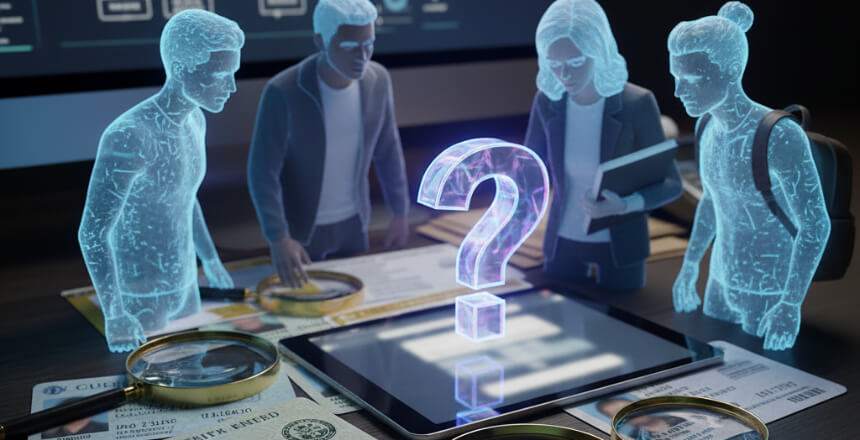
When most people think about fake ID websites, they picture one type of user.
A college student trying to get into a bar.
That image isn't wrong but it's wildly incomplete.
In 2026, fake ID websites attract very different kinds of users, for very different reasons. Some are impulsive. Some are strategic. Some are criminal. Some never even intend to buy anything. You can read more about this in How Fake ID Websites Work. All users of fraudulent identity documents face potential prosecution under 18 U.S.C. § 1028, regardless of their intent.
Understanding who uses these sites is essential if you want to understand why fake ID websites still exist, why law enforcement monitors them, and why the risks go far beyond a single card. For more on this topic, see our guide on Are Fake ID Websites Real or Fake. The FBI Cyber Division monitors fake ID websites as part of broader online fraud investigations.
First, What We Mean by a "Fake ID Website"?
A fake id website is any online platform that claims to sell, review, promote, or explain non-government identification documents that imitate real IDs. Learn more about this in our article on Fake ID Website Safety Guide.
- Some present themselves as vendors.
- Some act as review hubs.
- Some position themselves as informational or novelty-focused sites.
Regardless of presentation, they all operate inside the same ecosystem one shaped by identity verification technology, cybercrime, financial fraud, and law-enforcement surveillance.
This article breaks down the actual user groups inside that ecosystem. 1. Underage Students and Young Adults
This is still the largest and most visible group.
These users are usually:
18-21 years old College or university students First-time visitors to fake ID websites Why they use fake ID websites We cover this in more detail in Novelty IDs Use Cases.
Most are trying to bypass age restrictions related to:
Alcohol purchases Bars and clubs Events or venues
The motivation is social, not criminal.
What's changed is the risk profile.
Modern fake ID websites collect high-quality personal data, and students rarely understand how permanent that exposure can be especially when disciplinary records, background checks, and digital identity systems are involved.
Key risk: long-term academic and identity consequences, not just getting caught once.
2. Socially Influenced First-Time Buyers
Some users aren't driven by need they're driven by social proof.
These users arrive after:
Reading Reddit threads Seeing "best fake ID websites" lists Hearing friends say "it worked for me" Our guide on Best Fake ID Websites goes deeper into this.
They assume that repetition equals safety.
Fake ID review sites reinforce this belief by ranking vendors and focusing on surface-level success stories instead of real verification or legal risk.
This group explains why fake ID websites scale so easily, even when outcomes are inconsistent. 3. People Trying to Bypass Online Platforms
Not all fake ID website users are looking for physical access.
Some are trying to get around digital identity controls.
These users attempt to:
Reopen banned accounts Access age-restricted apps Register on crypto exchanges or gambling platforms Create alternate online identities
In most cases, this fails.
Platforms using services from companies like Jumio and Entrust cross-check documents, facial biometrics, and device data.
Even high-quality fake IDs rarely survive this level of scrutiny.
Must Read: Is Using a Fake ID Website Illegal?
4. Organized Fraud and Criminal Networks
This is the group most people never think about and the one law enforcement cares about most.
- For organized crime, fake ID websites are not convenience tools.
- They are infrastructure.
Criminal networks use these sites to:
Source fraudulent documents Harvest personal data Support financial fraud Enable money laundering and account takeovers
Organizations like the Federal Bureau of Investigation and INTERPOL classify fake IDs as breeder documents because they enable other crimes.
This is why fake ID websites are monitored even when they appear "low-level."
5. Synthetic Identity Fraud Operators
This is one of the most important and least visible user groups.
These users often never intend to use the fake ID themselves.
Instead, they collect:
Real names Dates of birth Facial images Signatures
This data is combined with fabricated information to create synthetic identities.
According to the Federal Trade Commission, synthetic identity fraud is one of the fastest-growing categories of financial crime.
Fake ID websites are valuable because they provide verified-looking personal data at scale. 6. Malware and Credential Harvesters
Some users aren't interested in IDs at all.
They're interested in access.
Certain fake ID websites distribute:
Fake "ID tools" Verification software Tracking or download files
These installs can deploy malware that steals:
Browser credentials Saved passwords Session cookies Cryptocurrency wallet access
In these cases, the fake ID is just bait. 7. Information Only and Risk-Aware Visitors
Not everyone who visits a fake ID website wants to buy something.
A growing segment of users visits to:
Research fake ID laws Understand risks Compare claims vs reality Learn how verification systems work
This shift also explains why content-led sites tend to survive longer in search results. What All These Users Have in Common
Despite very different motivations, most fake ID website users share three patterns:
They underestimate long-term risk They trust surface legitimacy (design, reviews, rankings) They don't realize identity data is permanent
That's why consequences often show up months or years later not immediately. Final Takeaway
Fake ID websites are no longer used by one kind of person for one kind of reason.
They are visited by:
- students
- first-time risk-takers
- platform circumvention attempts
- organized crime groups
- identity fraud operators
- researchers and cautious readers
The difference isn't who clicks.
It's who pays the price later.
Frequently Asked Questions
Who are the main customers of fake ID websites?
The primary customer base is college students aged 18 to 20 seeking age verification for bars and clubs. Other users include film producers needing prop IDs, collectors, individuals in countries with high legal drinking ages, and people needing backup identification.
Do adults over 21 buy fake IDs?
Yes. Some adults purchase fake IDs for privacy reasons, as backup identification, for creative projects like film and photography, or for novelty and collectible purposes. Not all fake ID purchases are motivated by underage access.
Is buying a fake ID a college-only thing?
No. While college campuses represent the largest market segment, fake ID buyers span multiple demographics and age groups with varying motivations ranging from entertainment and creative projects to privacy concerns and collectible interests.